
More Degrees, More Debt, Less Direction: Why Illinois Is Looking the Wrong Way on Workforce Development

By Dr. Eric M. Wallace
A recent proposal highlighted by Wirepoints suggests expanding community colleges in Illinois to offer bachelor’s degrees in the name of “access” and “affordability.” On the surface, that sounds compelling. Who wouldn’t want more opportunity at a lower cost? But beneath the rhetoric lies a deeper question: are we actually solving the problem, or simply expanding a broken model?
Advocates argue that allowing community colleges to offer four-year degrees will widen access to higher education. But access to what, exactly? Illinois already has an extensive network of public universities designed to provide bachelor’s degrees. If community colleges begin offering the same credentials, we must ask how these programs are meaningfully different from existing state universities. Will they truly be more affordable, or will they gradually adopt the same costly administrative structures that have driven up tuition for decades? Too often, the language of “access” becomes a substitute for accountability, masking expansion without clear outcomes.
History gives us reason for caution. Higher education costs have risen consistently even as access has expanded. New programs inevitably bring increased administrative overhead, expanded faculty demands, and additional infrastructure costs. There is little reason to believe community colleges will be immune to these same pressures. What begins as a cost-saving measure often evolves into another taxpayer burden, especially in a state like Illinois that is already struggling financially. This is not just an educational issue; it is a matter of stewardship.
The deeper problem, however, is not a lack of degrees but a lack of job-ready skills. For decades, vocational education was systematically removed from our high schools. Trade programs, once a reliable pathway into the middle class, were replaced with a one-size-fits-all message: go to college. The result has been predictable. We now have a surplus of degrees in fields with limited demand and a shortage of skilled workers in trades such as construction, manufacturing, and technical services. Many young people graduate burdened with debt but lacking the practical skills necessary to secure stable employment.
Instead of turning community colleges into smaller versions of universities, we should be restoring their original purpose as engines of workforce development. Community colleges are uniquely positioned to provide technical certifications, partner with local industries, offer apprenticeship pipelines, and fill the gap once occupied by vocational high schools. This is where they can make the greatest impact, not by duplicating what universities already do, but by doing what universities cannot.
Before we add more years of education, we should fix the system we already have, beginning with our high schools. Research consistently points to what has been called the “success sequence”: finish high school, get a job, get married, and then have children. Those who follow this sequence dramatically reduce their likelihood of living in poverty. If we are serious about fighting poverty, this is where our focus should be. Strengthening K–12 education, reintroducing vocational and trade pathways, and reinforcing the cultural and economic value of work and family will do far more to uplift communities than simply extending the length of community college programs.
From a policy perspective, this proposal reflects a broader tendency in government. When a system underperforms, the instinct is to expand it rather than reform it. But responsible government requires clear priorities, fiscal discipline, and alignment with real-world outcomes. Creating new bachelor’s degree programs at community colleges may sound innovative, but it risks becoming another costly layer in an already inefficient system.
If Illinois truly wants to expand opportunity, the solution is not more degrees but better direction. We should invest in trade schools and technical education, restore vocational training in high schools, strengthen partnerships between education and industry, and preserve community colleges as affordable, targeted workforce institutions. Universities should remain focused on what they were designed to do: provide four-year degrees in specialized fields.
The goal should not be to produce more graduates. The goal should be to produce more prepared, productive, and self-sufficient citizens. Until we make that shift, we will continue to spend more, promise more, and deliver less.
A recent proposal highlighted by Wirepoints suggests expanding community colleges in Illinois to offer bachelor’s degrees in the name of “access” and “affordability.” On the surface, that sounds compelling. Who wouldn’t want more opportunity at a lower cost? But beneath the rhetoric lies a deeper question: are we actually solving the problem, or simply expanding a broken model?
Advocates argue that allowing community colleges to offer four-year degrees will widen access to higher education. But access to what, exactly? Illinois already has an extensive network of public universities designed to provide bachelor’s degrees. If community colleges begin offering the same credentials, we must ask how these programs are meaningfully different from existing state universities. Will they truly be more affordable, or will they gradually adopt the same costly administrative structures that have driven up tuition for decades? Too often, the language of “access” becomes a substitute for accountability, masking expansion without clear outcomes.
History gives us reason for caution. Higher education costs have risen consistently even as access has expanded. New programs inevitably bring increased administrative overhead, expanded faculty demands, and additional infrastructure costs. There is little reason to believe community colleges will be immune to these same pressures. What begins as a cost-saving measure often evolves into another taxpayer burden, especially in a state like Illinois that is already struggling financially. This is not just an educational issue; it is a matter of stewardship.
The deeper problem, however, is not a lack of degrees but a lack of job-ready skills. For decades, vocational education was systematically removed from our high schools. Trade programs, once a reliable pathway into the middle class, were replaced with a one-size-fits-all message: go to college. The result has been predictable. We now have a surplus of degrees in fields with limited demand and a shortage of skilled workers in trades such as construction, manufacturing, and technical services. Many young people graduate burdened with debt but lacking the practical skills necessary to secure stable employment.
Instead of turning community colleges into smaller versions of universities, we should be restoring their original purpose as engines of workforce development. Community colleges are uniquely positioned to provide technical certifications, partner with local industries, offer apprenticeship pipelines, and fill the gap once occupied by vocational high schools. This is where they can make the greatest impact, not by duplicating what universities already do, but by doing what universities cannot.
Before we add more years of education, we should fix the system we already have, beginning with our high schools. Research consistently points to what has been called the “success sequence”: finish high school, get a job, get married, and then have children. Those who follow this sequence dramatically reduce their likelihood of living in poverty. If we are serious about fighting poverty, this is where our focus should be. Strengthening K–12 education, reintroducing vocational and trade pathways, and reinforcing the cultural and economic value of work and family will do far more to uplift communities than simply extending the length of community college programs.
From a policy perspective, this proposal reflects a broader tendency in government. When a system underperforms, the instinct is to expand it rather than reform it. But responsible government requires clear priorities, fiscal discipline, and alignment with real-world outcomes. Creating new bachelor’s degree programs at community colleges may sound innovative, but it risks becoming another costly layer in an already inefficient system.
If Illinois truly wants to expand opportunity, the solution is not more degrees but better direction. We should invest in trade schools and technical education, restore vocational training in high schools, strengthen partnerships between education and industry, and preserve community colleges as affordable, targeted workforce institutions. Universities should remain focused on what they were designed to do: provide four-year degrees in specialized fields.
The goal should not be to produce more graduates. The goal should be to produce more prepared, productive, and self-sufficient citizens. Until we make that shift, we will continue to spend more, promise more, and deliver less.
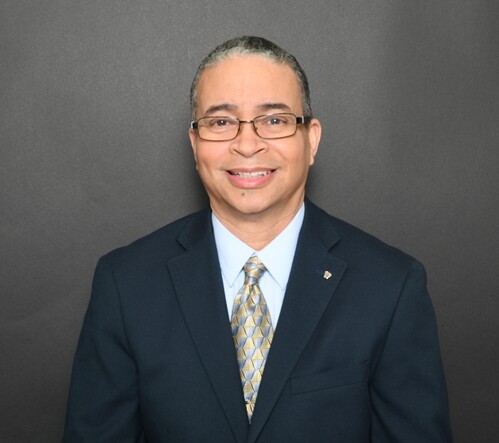
Dr. Eric M. Wallace, author of the new book, The Heart of Apostasy: How The Black Church Abandoned Biblical Authority for Political Ideology--And How to Reclaim It, is a trailblazing scholar, dynamic speaker, and passionate advocate for faith-based conservatism. With a distinguished academic background and an unwavering commitment to biblical truth, Wallace has become a leading voice challenging cultural and political narratives that conflict with a biblical worldview.
Wallace holds postgraduate degrees in biblical studies (M.A., ThM, Ph.D.), Wallace is the first African American to earn a Ph.D. in biblical studies from Union-PSCE (now Union Presbyterian Seminary). His scholarship and ministry experience equip him to address today’s most pressing sociopolitical issues through the lens of faith, reason, and historical accuracy.
Wallace holds postgraduate degrees in biblical studies (M.A., ThM, Ph.D.), Wallace is the first African American to earn a Ph.D. in biblical studies from Union-PSCE (now Union Presbyterian Seminary). His scholarship and ministry experience equip him to address today’s most pressing sociopolitical issues through the lens of faith, reason, and historical accuracy.
Posted in Dr. Eric M. Wallace, Wirepoints, higher education, vocational schools, Trade Schools, Trade workers, teachers union, Universities, taxes, community colleges, success sequence, Public Universities, degrees, Training, Skill set, High School, Big government, #freedomsjournalmagazine, Freedoms Journal Institute, Responsible Government
Recent
The Big Tent Party: Right? Sure? Whatever?
September 30th, 2026
Maybe we've become too Selfish?
August 20th, 2026
Equal Before God, Unequal in Gifts
August 20th, 2026
Beyond Personality Politics: A Biblical Framework for Evaluating Our Leaders
July 27th, 2026
The NAACP's Moral Crisis: When Civil Rights Abandons Biological Reality
July 8th, 2026
Archive
2026
January
March
THE GEOPOLITICAL CHESSBOARD AND THE SPIRITUAL WAR WE’RE IGNORING--Part 1THE SPIRITUAL DIMENSION AND THE CHURCH’S COMPLICITY--Part 2Racism, Sin, and the Republican Party: A Christian ResponseA Moment of Reflection on the Life of Rev. Jesse Jackson Sr.Black Americans Are Not Hyphenated CitizensWhen “Jesus Never Said That” Becomes a License for ApostasyWhen Scripture Is No Longer First: The Heart of Apostasy in the Black Church and American PoliticsDemocrats Good……Trump Bad
April
When Conviction Becomes Costly: Faith, Culture, and the Silence of the ChurchNo Savior but Christ: When Politics Crosses a Sacred LineWhat Good Is a Worldview If We Are Not Guided by It?When Resurrection Sunday Becomes Interfaith: Why the Church Must Guard the GospelSocialism in the City: When Government Tries to Play GodWords Matter: The Dangerous Illusion Behind “Mass Incarceration”More Degrees, More Debt, Less Direction: Why Illinois Is Looking the Wrong Way on Workforce DevelopmentNow, I suppose, he’s a Hitlerian KingJustice Without Partiality: What the Louisiana Ruling Reveals About America’s Heart
May
June
July
America at 250 and Freedom's Journal at 200: The Unfinished Work of FreedomThomas Jeremiah, America's Founding, and the Importance of Telling the Whole StoryThe NAACP's Moral Crisis: When Civil Rights Abandons Biological RealityBeyond Personality Politics: A Biblical Framework for Evaluating Our Leaders
2025
February
March
July
September
October
November
2024
January
Cartoon 01/01/24Cartoon 01/02/24Claudine Gay Betrayed the American Values of My Black Elders to Exploit White GuiltCartoon 01/03/24Cartoon 01/05/24Cartoon 01/06/24Cartoon 01/07/24Cartoon 01/08/24We need a David, not a SaulCartoon 01/13/24Cartoon 01/09/24Cartoon 01/10/24Cartoon 01/11/24Cartoon 01/14/24Cartoon 01/12/24What Happens to a King Deferred? A ReduxCartoon 01/15/24Cartoon 01/16/24The Good Guys with Guns Part 1Cartoon 01/17/24America Works. DEI Doesn’t.Cartoon 01/18/24Cartoon 01/23/24Good Guys with Guns Part 2Cartoon 01/19/24Cartoon 01/21/24Cartoon 01/22/24Cartoon 01/24/24Cartoon 01/26/24Cartoon 01/25/24Cartoon 01/27/24
No Comments