
When Christian Colleges Die: A Call to Rebuild Biblical Worldview Training
By Dr. Eric M. Wallace
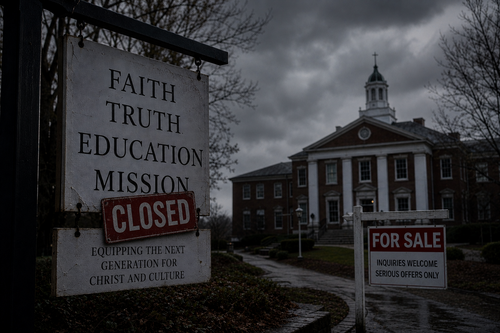
When Trinity Christian College in Palos Heights, IL, graduated its final class this past May, my heart sank. Sadly, Trinity is not alone. Over the past several decades, a growing number of Christian colleges, universities, Bible colleges, and seminaries have either closed their doors, merged with other institutions, significantly downsized, or drifted from the biblical convictions upon which they were founded. Trinity Evangelical Divinity School, long regarded as one of the premier evangelical seminaries in America, recently graduated its final class in Deerfield, Illinois. Numerous other institutions face uncertain futures as enrollment declines, costs increase, and the cultural landscape becomes increasingly hostile to historic Christianity.
This news struck me personally because formal biblical training has played a significant role in my own life and ministry. By God's grace, I earned a bachelor's degree in pastoral studies from Washington Bible College, a Master of Arts in Biblical Studies with an emphasis in the Old Testament from Alliance Theological Seminary, a Master of Theology in Biblical Studies, Old Testament, and a Ph.D. in Biblical Studies with an emphasis in the New Testament from Union Theological Seminary (now Union Presbyterian Seminary). I mention these degrees not to boast, but to explain why the closure of Christian institutions concerns me deeply. The first two of the schools I attended have already closed. The seminary where I earned my Th.M. and Ph.D. no longer offers the doctoral program through which I was trained. As I reflected on these realities, I found myself asking a troubling question: Who will train the next generation of pastors, missionaries, teachers, biblical scholars, apologists, and Christian leaders?
Certainly, there are economic reasons for what we are witnessing. Many Christian colleges are facing declining enrollment, demographic changes, lower birth rates, rising operational costs, increased competition from online education, and mounting concerns over student debt. Some institutions have struggled with financial management or failed to adapt to changing educational markets. These realities cannot be ignored. Yet economics alone does not explain the broader crisis facing Christian higher education.
Many institutions have also experienced theological drift. In an effort to remain culturally relevant, they have gradually embraced assumptions and ideologies that would have been foreign to their founders. Rather than shaping culture through the truth of Scripture, they increasingly allow culture to shape their interpretation of Scripture. The result is often a subtle but significant departure from biblical authority. What begins as a desire to engage with the culture can eventually become an accommodation to it.
As a Black evangelical, I understand the desire for Christian institutions to reflect the diversity of God's kingdom. The Church includes believers from every tribe, tongue, people, and nation. Yet diversity of ethnicity and experience must never come at the expense of biblical orthodoxy. Institutions that exist to train Christian leaders must remain committed to the authority, sufficiency, and truthfulness of God's Word. When theological fidelity becomes secondary to cultural acceptance, institutions inevitably lose their identity.
One of the most significant challenges facing Christian institutions today is the influence of Critical Race Theory, identity politics, and other ideas rooted in Cultural Marxism. These frameworks often redefine human identity primarily through categories of race, power, oppression, and victimization rather than through humanity's shared creation in the image of God and our common need for redemption through Jesus Christ. Instead of reconciling people through the gospel, they frequently encourage division, resentment, and competing grievances. Rather than emphasizing our unity in Christ, they encourage believers to view one another through categories of race and power.
In my book, The Heart of Apostasy, I argue that whenever an ideology becomes the lens through which Scripture is interpreted rather than allowing Scripture to interpret culture, the seeds of apostasy have already been planted. The issue is not merely political. It is spiritual. The Church's mission is not to baptize the latest cultural movement but to proclaim the unchanging truth of God's Word. When Christian institutions lose confidence in Scripture's authority, they eventually lose confidence in the very mission they were created to fulfill.
Yet theological drift is only part of the problem. The deeper issue may be that many Christian institutions have forgotten their primary purpose. Christian colleges and seminaries do not exist merely to grant degrees. They exist to make disciples. They exist to prepare men and women to think Christianly, live faithfully, engage culture biblically, and advance the Kingdom of God. Education divorced from discipleship may produce graduates, but it will not produce faithful Christian leaders.
The closing of Trinity Christian College forced me to ask another question: What should come next?
As my wife Jennifer (who holds a Master of Arts degree in Clinical Psychology with an empahsis in Marriage and Family from Moody Theological Seminary) and I reflected on the future of Christian education, we became increasingly convinced that the Church needs more than another traditional college or seminary. While those institutions continue to serve an important role, the challenges facing the Church today require a renewed commitment to worldview formation and discipleship that extends beyond the classroom.
We began envisioning a Biblical Worldview Center dedicated to helping Christians develop and apply a biblical worldview to every sphere of life. What if pastors, educators, elected officials, business leaders, ministry leaders, students, and families could gather for intensive training rooted in Scripture and applied to the challenges of our day? What if biblical literacy, apologetics, discipleship, leadership development, public policy, media engagement, family restoration, economic empowerment, and cultural engagement could all be taught from a distinctly Christian perspective? What if the Church once again became the conscience of the culture rather than its echo?
These questions gave birth to our vision for a Biblical Worldview Center, not merely as a place, but as a movement dedicated to equipping believers to think biblically, live faithfully, and influence culture for Christ.
The goal is not merely education. The goal is transformation. At Freedom's Journal Institute, we have spent years developing what we call the R.I.S.E. PrinciplesTM: Responsible Government, Individual Liberty and Fidelity, Strong Family Values, and Economic Empowerment. These principles are not political slogans. They are applications of biblical truth to the challenges facing our communities, our churches, and our nation.
Responsible Government recognizes that civil authority is ordained by God to reward good and punish evil. Individual Liberty and Fidelity remind us that freedom flourishes only when it is accompanied by personal responsibility, moral character, and faithfulness to God. Strong Family Values affirm that the family is the foundational institution of society and that healthy families are essential to human flourishing. Economic Empowerment acknowledges the biblical dignity of work, stewardship, entrepreneurship, and generational responsibility. Together, these principles provide a framework for understanding how a biblical worldview applies to every area of life.
The crisis facing the Church today is not primarily a lack of information. It is a lack of discipleship. Many Christians know what they believe but struggle to apply those beliefs to culture, economics, education, politics, media, and family life. Others have unknowingly adopted secular assumptions that shape their thinking more than Scripture does. As a result, the Church often reflects the culture more than it influences it.
This is why our broader vision extends beyond a campus. It begins with a diagnosis. We must honestly assess the spiritual condition of both the Church and the culture. It continues with discipleship. Believers must be grounded in Scripture and equipped to think biblically about every sphere of life. This vision is reflected in The Heart of Apostasy. It is reflected in our documentary, Black Families Matter: Reclaiming a Community in Crisis. It is reflected in Repent Chicago, a citywide call to prayer, repentance, and spiritual awakening. It is reflected in RISE Chicago, an effort to develop mature disciples who can faithfully engage their communities and institutions. Together, these initiatives form what we call our Diagnosis-to-Discipleship strategy.
The Biblical Worldview Center would serve as a hub where all of these efforts intersect. It would be a place where Christians could receive worldview training, leadership development, and practical discipleship that equips them to serve Christ in every vocation and every sphere of influence. It would also be a place where pastors, particularly Black pastors who often have limited access to robust worldview training, could receive resources and encouragement to help their congregations engage the challenges of our time through the lens of Scripture rather than secular ideology.
While the future location of such an effort remains to be determined, the need itself is undeniable. Across America, churches, families, and Christian institutions are struggling to navigate an increasingly secular culture. The need for biblical worldview training has never been greater. Whether through conferences, certificate programs, leadership development, media initiatives, or a dedicated campus, the mission remains the same: to equip believers to engage every area of life under the lordship of Jesus Christ.
The Church cannot afford to ignore the warning these closures represent. The death of a Christian college is never merely the closing of a campus. It is a reminder that every generation must decide whether it will faithfully pass biblical truth to the next generation or allow that inheritance to be lost.
Buildings may close. Institutions may rise and fall. But the mission remains unchanged. The Church does not merely need another college. It needs a renewed commitment to biblical truth, faithful discipleship, and worldview training that prepares believers to serve Christ in every sphere of life. The next generation is waiting, and the responsibility to equip them belongs to us.
When Trinity Christian College in Palos Heights, IL, graduated its final class this past May, my heart sank. Sadly, Trinity is not alone. Over the past several decades, a growing number of Christian colleges, universities, Bible colleges, and seminaries have either closed their doors, merged with other institutions, significantly downsized, or drifted from the biblical convictions upon which they were founded. Trinity Evangelical Divinity School, long regarded as one of the premier evangelical seminaries in America, recently graduated its final class in Deerfield, Illinois. Numerous other institutions face uncertain futures as enrollment declines, costs increase, and the cultural landscape becomes increasingly hostile to historic Christianity.
This news struck me personally because formal biblical training has played a significant role in my own life and ministry. By God's grace, I earned a bachelor's degree in pastoral studies from Washington Bible College, a Master of Arts in Biblical Studies with an emphasis in the Old Testament from Alliance Theological Seminary, a Master of Theology in Biblical Studies, Old Testament, and a Ph.D. in Biblical Studies with an emphasis in the New Testament from Union Theological Seminary (now Union Presbyterian Seminary). I mention these degrees not to boast, but to explain why the closure of Christian institutions concerns me deeply. The first two of the schools I attended have already closed. The seminary where I earned my Th.M. and Ph.D. no longer offers the doctoral program through which I was trained. As I reflected on these realities, I found myself asking a troubling question: Who will train the next generation of pastors, missionaries, teachers, biblical scholars, apologists, and Christian leaders?
Certainly, there are economic reasons for what we are witnessing. Many Christian colleges are facing declining enrollment, demographic changes, lower birth rates, rising operational costs, increased competition from online education, and mounting concerns over student debt. Some institutions have struggled with financial management or failed to adapt to changing educational markets. These realities cannot be ignored. Yet economics alone does not explain the broader crisis facing Christian higher education.
Many institutions have also experienced theological drift. In an effort to remain culturally relevant, they have gradually embraced assumptions and ideologies that would have been foreign to their founders. Rather than shaping culture through the truth of Scripture, they increasingly allow culture to shape their interpretation of Scripture. The result is often a subtle but significant departure from biblical authority. What begins as a desire to engage with the culture can eventually become an accommodation to it.
As a Black evangelical, I understand the desire for Christian institutions to reflect the diversity of God's kingdom. The Church includes believers from every tribe, tongue, people, and nation. Yet diversity of ethnicity and experience must never come at the expense of biblical orthodoxy. Institutions that exist to train Christian leaders must remain committed to the authority, sufficiency, and truthfulness of God's Word. When theological fidelity becomes secondary to cultural acceptance, institutions inevitably lose their identity.
One of the most significant challenges facing Christian institutions today is the influence of Critical Race Theory, identity politics, and other ideas rooted in Cultural Marxism. These frameworks often redefine human identity primarily through categories of race, power, oppression, and victimization rather than through humanity's shared creation in the image of God and our common need for redemption through Jesus Christ. Instead of reconciling people through the gospel, they frequently encourage division, resentment, and competing grievances. Rather than emphasizing our unity in Christ, they encourage believers to view one another through categories of race and power.
In my book, The Heart of Apostasy, I argue that whenever an ideology becomes the lens through which Scripture is interpreted rather than allowing Scripture to interpret culture, the seeds of apostasy have already been planted. The issue is not merely political. It is spiritual. The Church's mission is not to baptize the latest cultural movement but to proclaim the unchanging truth of God's Word. When Christian institutions lose confidence in Scripture's authority, they eventually lose confidence in the very mission they were created to fulfill.
Yet theological drift is only part of the problem. The deeper issue may be that many Christian institutions have forgotten their primary purpose. Christian colleges and seminaries do not exist merely to grant degrees. They exist to make disciples. They exist to prepare men and women to think Christianly, live faithfully, engage culture biblically, and advance the Kingdom of God. Education divorced from discipleship may produce graduates, but it will not produce faithful Christian leaders.
The closing of Trinity Christian College forced me to ask another question: What should come next?
As my wife Jennifer (who holds a Master of Arts degree in Clinical Psychology with an empahsis in Marriage and Family from Moody Theological Seminary) and I reflected on the future of Christian education, we became increasingly convinced that the Church needs more than another traditional college or seminary. While those institutions continue to serve an important role, the challenges facing the Church today require a renewed commitment to worldview formation and discipleship that extends beyond the classroom.
We began envisioning a Biblical Worldview Center dedicated to helping Christians develop and apply a biblical worldview to every sphere of life. What if pastors, educators, elected officials, business leaders, ministry leaders, students, and families could gather for intensive training rooted in Scripture and applied to the challenges of our day? What if biblical literacy, apologetics, discipleship, leadership development, public policy, media engagement, family restoration, economic empowerment, and cultural engagement could all be taught from a distinctly Christian perspective? What if the Church once again became the conscience of the culture rather than its echo?
These questions gave birth to our vision for a Biblical Worldview Center, not merely as a place, but as a movement dedicated to equipping believers to think biblically, live faithfully, and influence culture for Christ.
The goal is not merely education. The goal is transformation. At Freedom's Journal Institute, we have spent years developing what we call the R.I.S.E. PrinciplesTM: Responsible Government, Individual Liberty and Fidelity, Strong Family Values, and Economic Empowerment. These principles are not political slogans. They are applications of biblical truth to the challenges facing our communities, our churches, and our nation.
Responsible Government recognizes that civil authority is ordained by God to reward good and punish evil. Individual Liberty and Fidelity remind us that freedom flourishes only when it is accompanied by personal responsibility, moral character, and faithfulness to God. Strong Family Values affirm that the family is the foundational institution of society and that healthy families are essential to human flourishing. Economic Empowerment acknowledges the biblical dignity of work, stewardship, entrepreneurship, and generational responsibility. Together, these principles provide a framework for understanding how a biblical worldview applies to every area of life.
The crisis facing the Church today is not primarily a lack of information. It is a lack of discipleship. Many Christians know what they believe but struggle to apply those beliefs to culture, economics, education, politics, media, and family life. Others have unknowingly adopted secular assumptions that shape their thinking more than Scripture does. As a result, the Church often reflects the culture more than it influences it.
This is why our broader vision extends beyond a campus. It begins with a diagnosis. We must honestly assess the spiritual condition of both the Church and the culture. It continues with discipleship. Believers must be grounded in Scripture and equipped to think biblically about every sphere of life. This vision is reflected in The Heart of Apostasy. It is reflected in our documentary, Black Families Matter: Reclaiming a Community in Crisis. It is reflected in Repent Chicago, a citywide call to prayer, repentance, and spiritual awakening. It is reflected in RISE Chicago, an effort to develop mature disciples who can faithfully engage their communities and institutions. Together, these initiatives form what we call our Diagnosis-to-Discipleship strategy.
The Biblical Worldview Center would serve as a hub where all of these efforts intersect. It would be a place where Christians could receive worldview training, leadership development, and practical discipleship that equips them to serve Christ in every vocation and every sphere of influence. It would also be a place where pastors, particularly Black pastors who often have limited access to robust worldview training, could receive resources and encouragement to help their congregations engage the challenges of our time through the lens of Scripture rather than secular ideology.
While the future location of such an effort remains to be determined, the need itself is undeniable. Across America, churches, families, and Christian institutions are struggling to navigate an increasingly secular culture. The need for biblical worldview training has never been greater. Whether through conferences, certificate programs, leadership development, media initiatives, or a dedicated campus, the mission remains the same: to equip believers to engage every area of life under the lordship of Jesus Christ.
The Church cannot afford to ignore the warning these closures represent. The death of a Christian college is never merely the closing of a campus. It is a reminder that every generation must decide whether it will faithfully pass biblical truth to the next generation or allow that inheritance to be lost.
Buildings may close. Institutions may rise and fall. But the mission remains unchanged. The Church does not merely need another college. It needs a renewed commitment to biblical truth, faithful discipleship, and worldview training that prepares believers to serve Christ in every sphere of life. The next generation is waiting, and the responsibility to equip them belongs to us.
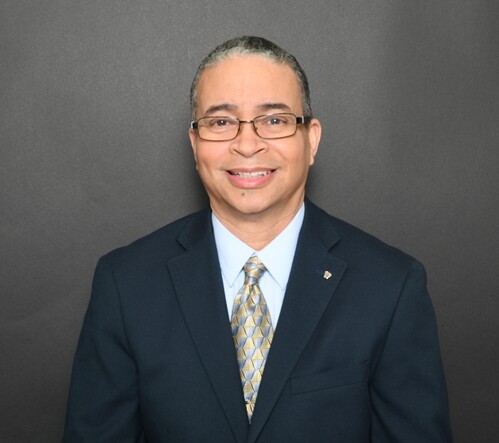
Dr. Eric M. Wallace, author of the new book, The Heart of Apostasy: How The Black Church Abandoned Biblical Authority for Political Ideology--And How to Reclaim It, is a trailblazing scholar, dynamic speaker, and passionate advocate for faith-based conservatism. With a distinguished academic background and an unwavering commitment to biblical truth, Wallace has become a leading voice challenging cultural and political narratives that conflict with a biblical worldview.
Wallace holds postgraduate degrees in biblical studies (M.A., ThM, Ph.D.), Wallace is the first African American to earn a Ph.D. in biblical studies from Union-PSCE (now Union Presbyterian Seminary). His scholarship and ministry experience equip him to address today’s most pressing sociopolitical issues through the lens of faith, reason, and historical accuracy.
Wallace holds postgraduate degrees in biblical studies (M.A., ThM, Ph.D.), Wallace is the first African American to earn a Ph.D. in biblical studies from Union-PSCE (now Union Presbyterian Seminary). His scholarship and ministry experience equip him to address today’s most pressing sociopolitical issues through the lens of faith, reason, and historical accuracy.
Posted in Opinion
Posted in Dr. Eric M. Wallace, biblical worldview, #crt, critical race theory, Christian Colleges, Training, Identity politics, American racism, leadership, vocational schools, seminary, #heartofapostasy, #blackfamliesmatter, R.I.S.E. Principles, discipleship, #freedomsjournalmagazine, Freedoms Journal Institute
Posted in Dr. Eric M. Wallace, biblical worldview, #crt, critical race theory, Christian Colleges, Training, Identity politics, American racism, leadership, vocational schools, seminary, #heartofapostasy, #blackfamliesmatter, R.I.S.E. Principles, discipleship, #freedomsjournalmagazine, Freedoms Journal Institute
Recent
Beyond Personality Politics: A Biblical Framework for Evaluating Our Leaders
July 27th, 2026
The NAACP's Moral Crisis: When Civil Rights Abandons Biological Reality
July 8th, 2026
Thomas Jeremiah, America's Founding, and the Importance of Telling the Whole Story
July 7th, 2026
America at 250 and Freedom's Journal at 200: The Unfinished Work of Freedom
July 2nd, 2026
The End of Slavery Was the 13th Amendment, Not Juneteenth
June 19th, 2026
Archive
2026
January
March
THE GEOPOLITICAL CHESSBOARD AND THE SPIRITUAL WAR WE’RE IGNORING--Part 1THE SPIRITUAL DIMENSION AND THE CHURCH’S COMPLICITY--Part 2Racism, Sin, and the Republican Party: A Christian ResponseA Moment of Reflection on the Life of Rev. Jesse Jackson Sr.Black Americans Are Not Hyphenated CitizensWhen “Jesus Never Said That” Becomes a License for ApostasyWhen Scripture Is No Longer First: The Heart of Apostasy in the Black Church and American PoliticsDemocrats Good……Trump Bad
April
When Conviction Becomes Costly: Faith, Culture, and the Silence of the ChurchNo Savior but Christ: When Politics Crosses a Sacred LineWhat Good Is a Worldview If We Are Not Guided by It?When Resurrection Sunday Becomes Interfaith: Why the Church Must Guard the GospelSocialism in the City: When Government Tries to Play GodWords Matter: The Dangerous Illusion Behind “Mass Incarceration”More Degrees, More Debt, Less Direction: Why Illinois Is Looking the Wrong Way on Workforce DevelopmentNow, I suppose, he’s a Hitlerian KingJustice Without Partiality: What the Louisiana Ruling Reveals About America’s Heart
May
June
July
America at 250 and Freedom's Journal at 200: The Unfinished Work of FreedomThomas Jeremiah, America's Founding, and the Importance of Telling the Whole StoryThe NAACP's Moral Crisis: When Civil Rights Abandons Biological RealityBeyond Personality Politics: A Biblical Framework for Evaluating Our Leaders
2025
February
March
July
September
October
November
2024
January
Cartoon 01/01/24Cartoon 01/02/24Claudine Gay Betrayed the American Values of My Black Elders to Exploit White GuiltCartoon 01/03/24Cartoon 01/05/24Cartoon 01/06/24Cartoon 01/07/24Cartoon 01/08/24We need a David, not a SaulCartoon 01/13/24Cartoon 01/09/24Cartoon 01/10/24Cartoon 01/11/24Cartoon 01/14/24Cartoon 01/12/24What Happens to a King Deferred? A ReduxCartoon 01/15/24Cartoon 01/16/24The Good Guys with Guns Part 1Cartoon 01/17/24America Works. DEI Doesn’t.Cartoon 01/18/24Cartoon 01/23/24Good Guys with Guns Part 2Cartoon 01/19/24Cartoon 01/21/24Cartoon 01/22/24Cartoon 01/24/24Cartoon 01/26/24Cartoon 01/25/24Cartoon 01/27/24
No Comments